
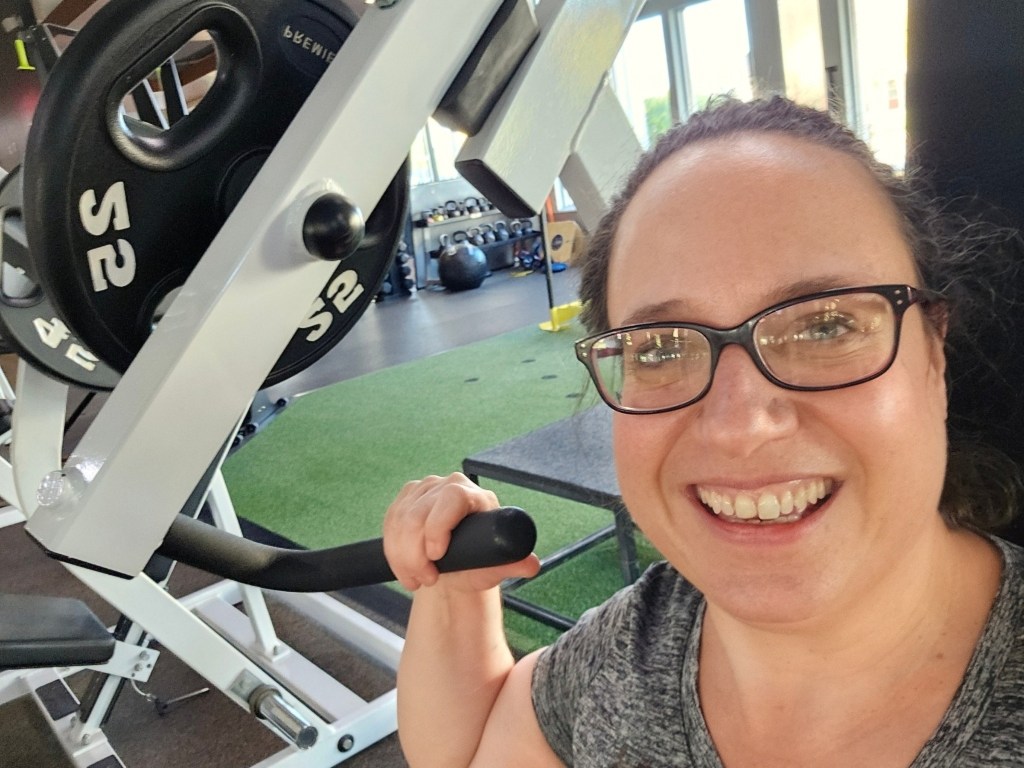
I spent a lot of my life avoiding exercise. I usually had a gym membership, but I often had an excuse for why I couldn’t get there. I knew it was good for me, but adding even more to my busy day felt like too much most of the time. It turns out, my body was resisting exercise because it was already stressed.
Maybe you are like me and want a reason to do things differently. Or maybe you are putting in hours at the gym and wondering why you aren’t losing weight? You’re not alone. And there’s a science-backed reason why more exercise isn’t always better.
You’ve probably heard that exercise is essential. And it is. But not all exercise is beneficial. In fact, depending on what you are doing and your mindset you could actually be making things harder.
Exercise has two main benefits in the body:
- It helps us feel better. The benefits of exercise including boosting mood and energy, sleeping better, thinking more sharply, and feeling more positively. Low physical activity has been associated with a greater risk of depression. In fact, a meta-analysis found that people with high levels of physical activity had 17% lower odds of depression. Another meta-analysis showed exercise also significantly decreased anxiety. When we move regularly, we feel stronger, more focused, and more like ourselves.
- It strengthens the body. Exercise builds metabolism-supporting muscle and helps helps maintain bone both important in maintaining health as we age.
The issue is that these two benefits come from different types of exercise. Depending on the type and your current level of stress, exercise can actually make it harder to loss weight.
It all comes down to cortisol, your body’s main stress hormone.
Move Smarter, Not More
The key is in matching the right type of movement to what your body needs.
- Gentle movement like yoga, walking, and stretching lowers cortisol and soothes the nervous system. These activities activate your parasympathetic nervous system involved in our “rest and restore” state. For women who are already under stress, this type of activity is important for keeping calm, easing muscle tension, and helping feel present and grounded. When I miss more than a day of movement, I can feel my anxiety levels rise. This keeps me motivated on the days I don’t feel like moving.
- Moderate cardio, such as long runs or bike rides, can raise cortisol especially if done daily and long. For women whose stress baseline is already high, this type of exercise can be counterproductive. This means if you are already dealing with chronic stress, poor sleep, or hormonal changes like perimenopause or menopause, prolonged moderate intensity exercise can lead to increased belly fat, disrupted sleep, and muscle loss. It turns out that pounding the treadmill for an hour every day, while well-intentioned, can actually work against your goals.
- Short high-intensity bursts like High-intensity interval training (HIIT) and lifting heavy weights in strength training can actually lower cortisol over time, while preserving muscle and boosting metabolism. When the intensity of the exercise is maximized and the duration is kept short, the provides the challenge to our bodies to boost muscle and bone while preventing the extended stress response. Research shows this type of activity builds lean muscle, supports metabolism, preserves bone density, and reduces fat without the cortisol overload. In one study, just 10 minutes of HIIT three times per week was comparable to 50 minutes of steady cardio in improving heart health and insulin sensitivity. And women in the programs reported greater enjoyment and more weight loss, especially around the belly.
Dr. Stacy Sims, a physiologist specializing in women’s health, emphasizes how midlife women benefit most from short, intense training and heavy lifting. “To stay strong in the game is not piling on more miles, but making more of those miles count.” Her work shows that resistance training and sprint-style intervals help women not just maintain but rebuild muscle, even post-menopause. That’s a big deal, because we naturally lose 3–5% of muscle every decade starting in our 30s. And more muscle means burning more calories at rest, improved insulin sensitivity and appetite.
The mindset we approach exercise with matters too. If you think of it as a dreaded punishment for eating that cookie, your body will respond with the understanding that the exercise is punishment. It doesn’t feel good. Instead, movement is a celebration of being alive. It’s delighting in the fact that our body can move in all directions, can be outside enjoying the spring air, or growing stronger with each challenge! I try to get outside most days, relishing this mental break from my to-do list and worries.
Let Movement Work With Your Body
Exercise should help you feel better, not more depleted. If your workouts are leaving you exhausted, ravenous, or stuck at the same weight (or gaining), your body might be asking for something different. When you tune in and choose movement that matches your real needs, everything starts working with you, not against you.
✅ Lower Stress with Gentle Movement: Try walking, stretching, or restorative yoga to calm your nervous system.
✅ Build Muscle with Resistance Training: Preserve strength and metabolism with weight training—even just twice a week makes a difference.
✅ Boost Results with Short, Intense Sessions: 10–20 minutes of high-intensity improves insulin sensitivity and helps reduce belly fat.
✅ Skip the Treadmill Marathons: Long cardio will backfire if you are already stressed, so listen to what your body needs.
Most importantly: move in ways that feel good, empowering, and sustainable. The best exercise isn’t the one that burns the most calories, it’s the one that keeps you coming back because it makes you feel alive! That’s the magic: when movement feels good, you stick with it.
I go for a light jog most days. I allow myself to switch to walking whenever I want to, and let myself relish in the sunshine, flowers, and good music playing in my headphones. I also do a sprint lap three times a week with short intense bursts (where I pretend I am being chased by a tiger). It is the sprinting that is building muscle, and I feel a difference in my body. I also have weights and a box for jumping as other kinds of short-intense burst activity.
Movement is one of our most powerful coping strategies AND movement is also the best muscle-building longevity strategy. Those are different kinds of movement and we need BOTH (but not a middle activity that does neither). The best part, both feel good! Recognize what its doing for you, and choose your movement accordingly. And when you are in the movement, whether it is a walk in the sun or lifting a heavy weight, enjoy what your body can do. Movement is a gift!
Ask yourself what kind of movement would feel good to my body today? Then go do it!
References
- Frank Penedo and Jason Dahn, “Exercise and well-being: a review of mental and physical health benefits associated with physical activity,” Current Opinion in Psychiatry 18, no. 2 (March 2005): 189-193, https://doi.org/10.1097/00001504-200503000-00013.
- Aaron Kandola, Garcia Ashdown-Franks, Joshua Hendrikse, Catherine Sabiston and Brendon Stubbs, “Physical activity and depression: Towards understanding the antidepressant mechanisms of physical activity,” Neuroscience and Biobehavioral Reviews 107 (Dec 2019): 525-539, https://doi.org/10.1016/j.neubiorev.2019.09.040.
- Brendon Stubbs, Davy Vancampfort, Simon Rosenbaum, Jospeh Firth, Theodore Cosco, Nicola Veronese, Giovanni Salim and Felipe Schuch, “An examination of the anxiolytic effects of exercise for people with anxiety and stress-related disorders: A meta-analysis,” Psychiatry Research 249 (March 2017): 102-108, https://doi.org/10.1016/j.psychres.2016.12.020.
- Stacy Sims and Selene Yeager. Next Level: Your Guide to Kicking Ass, Feeling Great, and Crushing Goals Through Menopause and Beyond (Emmaus, Pennsylvania: Rodale Books, 2022).
 Vibrant Juicy Life Blog