
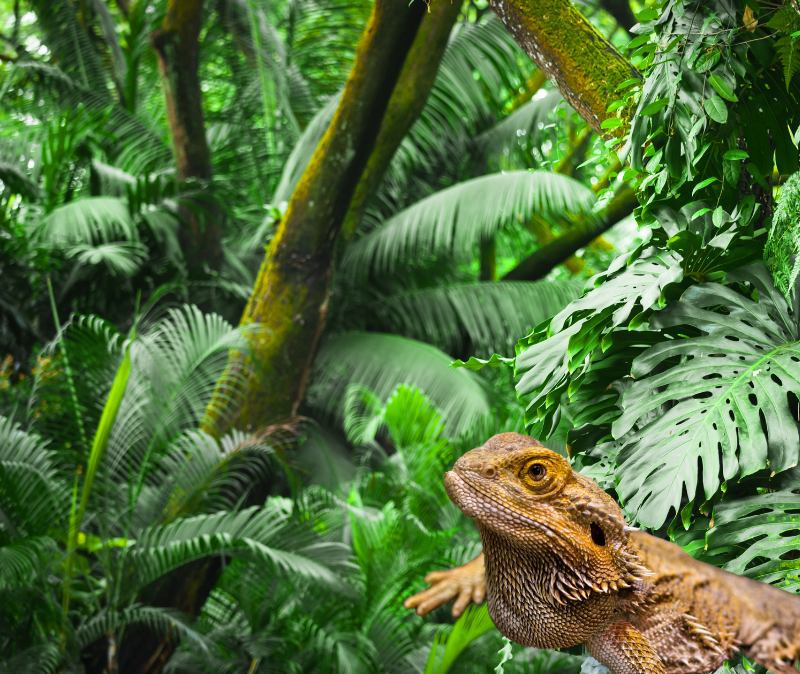
Your body was designed thousands of years ago for an ancient world. It is highly evolved with complex survival systems, but speaks and understands only a basic language. These systems break into three main categories:
- Mild stress like seasonal food scarcity found in winter: Your body handles mild stress by shifting systems. It halts growth and storage processes and turns to repair and breaking down stored fat as fuel for your body and brain. This system is behind much of the current wave of anti-aging longevity research. Stressors like fasting, ice baths, and certain compounds in plants are beneficial by mildly activating protective mechanisms used in this shift.
- Intense stress like being attacked: Your body handles intense stress by shifting into emergency mode, pumping out stress hormones like cortisol and adrenaline to heighten alertness and increase energy so that you can handle the crisis. When your body is in this state, it is not worrying about long-term health or regular function. It is begging you for quick energy (sugar cravings anyone?) and can’t be bothered to access and go through the complicated routine of breaking down and converting stored fat. If the stress never ends, you stay in this state indefinitely. Evolutionarily, dealing with the tiger was more important than your 60 year-old health (because by then, you had already reproduced and genetic survival no longer mattered).
- Even more intense stress like running for your life or famine: This type of extreme stress shifts your body into hyperdrive. It gets extremely efficient at sparing calories in an attempt to ensure survival. This is why exercising really hard or drastic calorie-cutting backfire when it comes to weight loss. Both extreme exercise and very low calorie diets have been shown to decrease metabolism. After just four days, the metabolism of subjects consuming 1,114 calories daily had slowed more than twice as much as subjects who were consuming 1,462 calories. And research suggests that metabolism stays lower even after normal eating is resumed.
You must speak to your body in this basic language if you want it to align with your goals. To release weight, you must tell your body that you are safe.
Show your body that food is abundant
Your body doesn’t understand nuances, so you have to show it that food is abundant. It doesn’t notice the shelves at the grocery store, although it might notice the hustle and frustration. Imagine how you would show an ancient reptile that it had plenty of food? You would FEED it, am I right?! But that ancient reptile might turn its nose up at eating cardboard? It can sense what foods are nourishing. I know we disconnected from our natural preferences and omnivores who will eat anything, but I want you to imagine feeding yourself a delicious, nutritious meal. Can you feel how your nervous system starts to relax? This is why we think of food as comfort!
The most nutritious foods are proteins, fats, and vegetables. Protein and fat are building blocks for our tissues. Protein is composed of amino acids, which are used by the body for structure (like muscle), storage, hormones, antibodies, and more. These factors are required for making things happen in the body at both cellular and larger levels. Fat acts to protect and insulate. Each cell in the body is surrounded by fat in the membrane, a key part of how cells signal and communicate with each other, take in nutrients, and respond to the environment.
The building blocks of protein are used to make feel-good neurotransmitters. Research shows that eating more protein is associated with better mood. These same neurotransmitters are also used in feedback mechanisms that regulate appetite and body weight.
In ancient times, fat was rare and only available in times of plenty. Most of our food was plants and lean wild game. Fat signals to the body that food is abundant. Study subjects eating more fat (and less carbs) had higher metabolisms compared to subjects eating a low-fat diet (over 300 calories higher!). They also had less hunger and cravings. By having small amounts of nuts, full-fat dairy, avocado, olive oil, and only healthy fats, you signal to your body that it is safe.
Plant foods are powerhouses of nutrients, including vitamins, minerals, phytonutrients and fiber. These nutritious foods feed your primal body and your microbiome- the community of microorganisms that live in your gut. By eating a variety of different plants, you nurture a broader range of these organisms. This diversity has been shown to be associated with better resilience to stress.
Ancient primal bodies did not have access to a lot of sweet or starchy foods. Processed starchy foods would not have existed and sweetness was a rare seasonal treat. As such, our bodies were wired to crave them for storage to survive times of scarcity. They do not signal our bodies to relax, they signal you to stockpile energy for lean times ahead.
Show your body that stress is mild
Right now, you are eating (or drinking, scrolling, staying busy…) to cope with life. Eating helps us feel better and more grounded – so that’s why you do it! Its our bodies way of trying to protect us in the way it knows, but now you can learn different strategies.
In stressful times, it is important to find ways to support yourself and let your body know that everything is ok. You will have to get quiet and ask yourself what you need – then listen. If you are not used to asking this question, you might have to ask a few times. It will likely ask you to do less and rest more, but this will not be the same for everyone.
One of my favorite coping strategies is movement. Countless studies prove that exercise helps relieve stress, dampen anxiety, and boost mood. It also builds strength (metaphor for emotional strength anyone?!). We evolved in an environment of regular movement, with days filled with walking and the work of harvesting and carrying enough food to ensure survival. Nowadays we know we should work out, but it feels like another chose on our to-do list. Or even worse, punishment.
Our mindset about movement matters. When viewed as a chore or punishment, we are not getting the same mental benefits. Your challenge opportunity is to find a way to make it joyful. Can you find an activity or reward that makes you happy? Maybe it is dancing, exercising with friends, taking a break outside, or hitting a challenge goal like a 5K? It might not always be the same and it’s ok to change!
Sometimes I tell myself I can skip going outside to jog, but then I find my belly-churning anxiety makes it’s appearance and I stop sleeping. So it is better to go out, but I allow myself to walk more. I make sure to turn my face to the sky and feel the wind. People ask me why I am out there in the cold instead of a treadmill – it’s because I cannot find any joy whatsoever on a treadmill.
When I run, after a few minutes of movement I am rewarded with near constant hits of intuition and inspiration. Wow, does that keep me motivated! When our bodies are busy, our minds have a chance to wander. Research shows that people are more creative during movement, with effects even after the movement is done. I also love taking a break from work and getting outside in nature. I listen to favorite music that makes me want to move and sometimes find myself shimmying and twirling in the street. (If you are my neighbors reading this, now you know what’s going on!). Sometimes I find delight in the way my body is moving.
My way is not the only way… i have a friend who somehow savors pain for the feeling of accomplishment it brings afterwards. So, if that works for you – great! As long as there is joy involved, you are speaking the right language.
I am doing much less this winter. It is making my Type A personality uncomfortable, but I remind myself that I am different now. That there are seasons to everything, and my body is saying this is not my busy time. I have rare gatherings with friends and text occasional messages to my besties, but I am also spending a lot of time alone. I recharge alone, even if I feel like I am missing out. There is tea, and soup, and cozy blankets, and mindless TV. I am reading fiction, which I haven’t had time for in a long time! There will be a new season of busy, I remind myself.
References
- Livea Godoy, Matheus Rossignoli, Polianna Delfino-Pereria, Norberto Garcia-Cairasco and Eduardo Umeoka, “A Comprehensive Overview on Stress Neurobiology: Basic Concepts and Clinical Implications,” Frontiers Behavioral Neuroscience 12 (July 2018): 127, https://doi.org/10.3389/fnbeh.2018.00127.
- Suresh Rattan, “Hormesis in aging,” Ageing Research Reviews 7, no. 1 (January 2008): 63-78, https://doi.org/10.1016/j.arr.2007.03.002.
- Markus Gerber, Sarah Jakowski, Michael Kellmann, Robyn Cody, Basil Gygax, Sebastien Ludyha, Caspar Muller, et al, “Macronutrient intake as a prospective predictor of depressive symptom severity: An exploratory study with adolescent elite athletes,” Psychology of Sport and Exercise 66 (May 2023): 102387, https://doi.org/10.1016/j.psychsport.2023.102387.
- JD Fernstrom, “Dietary effects on brain serotonin synthesis: relationship to appetite regulation,” American Journal of Clinical Nutrition 42, no. 5 (November 1985): 1072-1082, https://doi.org/10.1093/ajcn/42.5.1072.
- David Ludwig, Always Hungry?: Conquer cravings, retrain your fat cells and lose weight permanently (New York: Grand Central Publishing, 2016).
- Heiner Boeing, Angela Bechthold, Achim Bub, Sabine Ellinger, Dirk Haller, Anja Kroke, Eva Leschik-Bonnet, et al, “Critical review: vegetables and fruit in the prevention of chronic diseases,“ European Journal of Nutrition 51, no. 6 (September 2012): 637-63, https://doi.org/10.1007/s00394-012-0380-y.
- Mark Heiman and Frank Greenway, “A healthy gastrointestinal microbiome is dependent on dietary diversity,” Molecular Metabolism 5, no. 5 (March 2016): 317-320, https://doi.org/10.1016/j.molmet.2016.02.005.
- Shaillay Dogra, Joel Dore and Sami Damak, “Gut Microbiota Resilience: Definition, Link to Health and Strategies for Intervention,” Frontiers in Microbiology 11 (2020): 572921, https://doi.org/10.3389/fmicb.2020.572921.
- Kouda K, Nakamura H, Kohno H, Okuda T, Higashine Y, Hisamori K, Ishihara H, Tokunaga R, Sonoda Y. Metabolic response to short-term 4-day energy restriction in a controlled study. Environ Health Prev Med. 2006 Mar;11(2):89-92. doi: 10.1007/BF02898148.
- Barrows K, Snook JT. Effect of a high-protein, very-low-calorie diet on resting metabolism, thyroid hormones, and energy expenditure of obese middle-aged women. Am J Clin Nutr. 1987 Feb;45(2):391-8. doi: 10.1093/ajcn/45.2.391.
- Pontzer H, Durazo-Arvizu R, Dugas LR, Plange-Rhule J, Bovet P, Forrester TE, Lambert EV, Cooper RS, Schoeller DA, Luke A. Constrained Total Energy Expenditure and Metabolic Adaptation to Physical Activity in Adult Humans. Curr Biol. 2016 Feb 8;26(3):410-7. doi: 10.1016/j.cub.2015.12.046. Epub 2016 Jan 28. PMID: 26832439; PMCID: PMC4803033.
- Marily Oppezzo and Daniel Schwartz, “Give your ideas some legs: the positive effect of walking on creative thinking,” Journal of Experimental Psychology, Learning, Memory, and Cognition 40, no. 4 (April 2014): 1142–1152, https://doi.org/10.1037/a0036577.
 Vibrant Juicy Life Blog