
We find the taste of sweet and starchiness highly desirable. Back in ancestral times, these carbohydrate-heavy foods provided the energy we needed for survival. Calories were scarce so our bodies were wired to crave them. Harvest-time right before the lean days of winter was rich in carbohydrate-laden grains and fruit. As such, the taste of sweetness is a sign of nutrient density and highly palatable. Our bodies are wired to crave it for the high calories it offers, which used to be hard to find… easy calories! What a score! The taste of sweetness sets off a reward cascade in the brain keeping us wanting more, even when we aren’t hungry.1
Food processers use these cravings against us by designing highly palatable foods that keep us eating, so we buy more. They improve the taste and appeal by adding sugars and refining grains to make them milder and smooth.2 This makes foods more addicting. Have you ever wondered why there is a whole aisle in the grocery store of chips? Processing and variety makes us want more, even when it is something as simple as changing a shape. Foods like crackers, cookies, breakfast cereals, pasta and chips come in lots of variety, making us want to try them all.3
When we eat these sugars and starches, they are rapidly digested and converted into glucose. The taste of sweetness in almost any form (sugar, non-caloric sweeteners, stevia, honey, etc) triggers our bodies to release insulin, which acts as a “storage hormone” allowing glucose to be taken into the cells for energy. Non-caloric sweeteners (stevia, monkfruit, sucralose, aspartame, etc) also have the added bonus of increasing appetite because your body primed itself for calories – and its still ready and waiting?!4
Once the cells have taken in all they need, the excess is stored in the liver or as fat for a rainy day. Your ancestors survived the winter months with those stored calories. Your body knows how to survive famines… that’s how you made it this far (evolutionarily). And no one told your highly evolved body that everything is different in the last hundred years. It is doing what it does best, preparing you for famine… it just keeps storing the excess away.
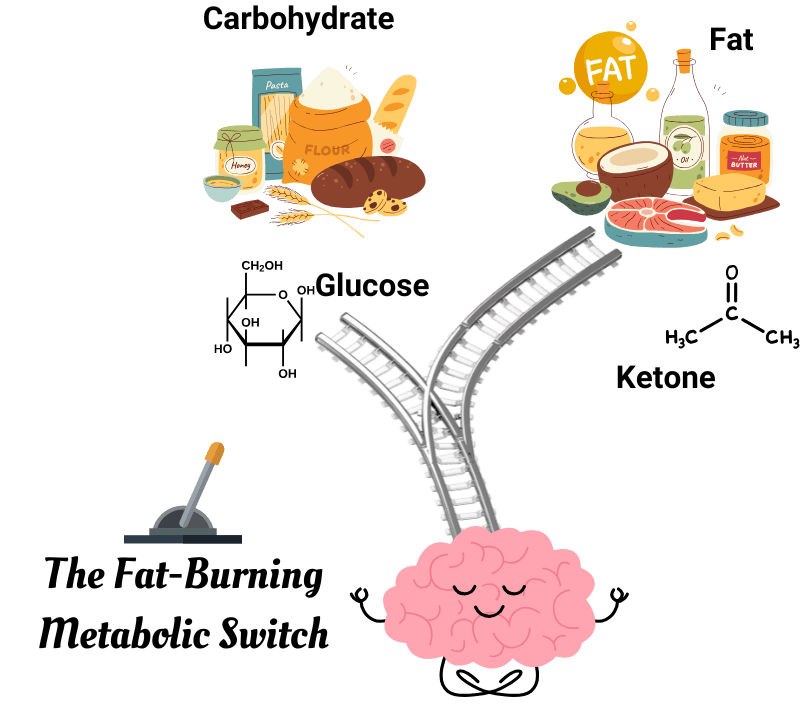
Food scarcity has been common for most of human history. As such, our bodies have evolved an elegant system that allows our brain to use either glucose (from carbohydrate) or ketones (from fat) as fuel. While glucose is easier, the body utilizes a metabolic switch and begins to run on ketones fairly rapidly when it is not available. This switch occurs in just 12-36 hours of fasting or 2-7 days of low carbohydrate.5,6 This state is called ketosis and used to be fairly common. In fact, research suggests that ketones are the preferred fuel for both the brain and body during periods of fasting and extended exercise.
When we limit carbohydrates (either through fasting or restriction) our brain and body start burning fat for fuel. This state is not harmful as long as it is not maintained indefinitely.7 In fact, it is associated with more energy, decreased hunger, lower inflammation, better lipid and glucose markers, and weight loss.7 Fasting even activates anti-aging cellular repair mechanisms that helped to extend survival until a better possibility of reproduction.6
So why aren’t we all in ketosis right now?! Because we live in a time of abundance, and to get to this fat-burning state we have to over-ride our natural instincts for sweet and starchy food. While it feels hard for the first 2-7 days, if you can hang on, the other side is filled with more energy, lightness, and mental clarity!
Here’s how to make this magical fat-burning state easier:
1. Focus on Abundant Vegetables as you Cut Back on Carbs
The most important part of the process is restricting carbohydrates. This means no grains (flour or processed foods), potatoes, corn, or sweets. This might sound challenging, but focusing on abundant vegetables, emphasizing variety and playing with new foods and spices make it easier. Try swapping out bread and pasta for lettuce wraps, sliced cabbage or zucchini noodles. You are going to feel so good!
2. Increase Healthy Fats and Protein
To support your body in adapting, add more healthy fats like avocados, olive oil, nuts, seeds, and fatty fish. These fats will become your new energy source and help keep you feeling full and satisfied. Include protein at each meal so you feel full and satisfied.
3. Stay Hydrated and Balance Electrolytes
As your body adjusts, you may lose water weight, which can lead to dehydration or electrolyte imbalances. Drink plenty of water and add a pinch of sea salt to meals or sip on broth to replenish sodium, magnesium, and potassium levels.
4. Feed your Brain with C-8 MCT oil
The first few days might be difficult as your brain looks for the glucose that is missing. You might have intense cravings, body aches, brain fog, or even depression. These symptoms can feel impossible, but it all goes away in 2-7 days. Research suggests that medium chain triglycerides may help you feel full and satisfied, and might even help your brain energy while you are converting.9,10 Take a spoonful or two of C-8 MCT oil (medium chain triglycerides) when you are struggling. The C-8 stands for the number of carbons (8) which is short enough to get into the brain. You will only need it for the first week or two. The first time is the hardest, and it gets easier every time!
5. Listen to Your Body and Don’t Stay in Ketosis Indefinitely
Ketosis is not a state that should necessarily be maintained forever. Research showed that mice kept on long-term ketosis had signs of tissue aging.7 This is good news because it further corroborates my suspicions (and all of human history) that we are meant to switch back and forth! Listen to your body and somewhere between 2-9 months it will tell you it needs a break. Knowing that this isn’t forever keeps you from feeling deprived, and also keeps your body burning fat like a finely oiled machine.
Starting ketosis is like giving your metabolism a makeover—it takes a bit of effort upfront, but the energy boost and weight-loss potential are so good! Make sure to pay attention to how you feel, and make adjustments as needed. If something doesn’t feel right, consult a healthcare provider.
Let me know if you’d like tips or recipes to kickstart your journey. 😊 Happy fat-burning!
References
- Freeman C, Zehra A, Ramirez V, et al., Impact of sugar on the body, brain, and behavior. Frontiers in Biosciences (Landmark Ed) 23, no. 12 (June 2018): 2255-2266.
- Wisniewski L, Epstein L, Caggiula A., Effect of food change on consumption, hedonics, and salivation. Physiology & Behavior 52 (July 1992): 21–6.
- Johnson F, Wardle J., Variety, Palatability, and Obesity. Advances in Nutrition 5, no. 6 (November 2014): 851–859.
- Anton SD, Martin CK, Han H, et al., Effects of stevia, aspartame, and sucrose on food intake, satiety, and postprandial glucose and insulin levels. Appetite. 2010 Aug;55(1):37-43.
- Reichard GA, Owen OE, Haff AC, et al., Ketone-body production and oxidation in fasting obese humans. J Clin Invest. 1974, 53 (2):508–515.
- Anton SD, Moehl K, Donahoo WT, et al. Flipping the Metabolic Switch: Understanding and Applying the Health Benefits of Fasting. Obesity (Silver Spring). 2018 Feb;26(2):254-268.
- Wei SJ, Schell JR, Chocron ES, et al,. Ketogenic diet induces p53-dependent cellular senescence in multiple organs. Sci Adv. 2024 May 17;10(20): eado1463.
- Dowis K, Banga S., The Potential Health Benefits of the Ketogenic Diet: A Narrative Review. Nutrients. 2021; 13(5):1654.
- Maher T, et al. Food Intake and Satiety Response after Medium-Chain Triglycerides Ingested as Solid or Liquid. Nutrients. 2019 Jul 17;11(7):1638.
- Ota M, Matsuo J, Ishida I, et al,. Effects of a medium-chain triglyceride-based ketogenic formula on cognitive function in patients with mild-to-moderate Alzheimer’s disease. Neurosci Lett. 2019 Jan 18;690:232-236.
 Vibrant Juicy Life Blog